

October’s sexual harassment law changes – is your business ready?

New sexual harassment law changes: is your business ready?
Expert insight from Rebecca Gale – Lomarton HR Advisory
A subtle but significant shift in employment law took place from 30 October 2026, businesses are now required to take “all reasonable steps” to prevent sexual harassment at work.
Employers have been under a preventative duty since October 2024, but the current requirement is to take “reasonable steps”. The Employment Rights Act 2025 raises that standard by adding one small but important word: “all”.
In practice, employers will need to take a more comprehensive approach. Rather than relying on a limited number of measures, they should consider the full range of steps that could reasonably be taken within their particular organisation.
The changes will also introduce stronger protection against harassment by third parties, covering sexual harassment as well as harassment related to protected characteristics. Third parties can include customers, clients, patients, service users, suppliers and contractors. It is an important development for any organisation whose employees deal regularly with people outside the business.
A change in emphasis
This change reflects a wider shift in how workplace sexual harassment is expected to be managed. The focus is moving firmly towards prevention rather than simply responding well after something has happened.
That requires employers to look honestly at where problems could arise. Those risks will not be the same in every workplace. In professional services, they might be associated with client entertaining, conferences, networking events or business travel. In hospitality, alcohol, late-night working and customer behaviour may create particular concerns. In care, retail and public-facing roles, employees may have regular contact with patients, service users or members of the public, sometimes while working alone.
The modern workplace also extends beyond a physical location. Sexual harassment can take place through email, messaging platforms, video calls and social media, including on personal devices where there is a connection to work.
Rebecca Gale, who leads HR Advisory at Lomarton, says the change should encourage businesses to look beyond whether they have the right wording in their employee handbook.
“The move from ‘reasonable steps’ to ‘all reasonable steps’ means employers need to take a more joined-up approach. A policy is important, but it cannot simply sit on a shelf and be forgotten. Businesses need to understand where their particular risks are, decide what measures are appropriate and make sure those measures work in practice.
“This should not be viewed as a paperwork exercise. Done properly, it is an opportunity to create a safer working environment, give managers the confidence to deal with concerns and reassure employees that they will be listened to and supported.”
What should employers have in place?
A strong policy remains part of the picture, but it needs to be supported by meaningful action. Employees should understand what sexual harassment can look like and know how to raise a concern. Managers need the confidence to respond appropriately when an issue is disclosed, while those handling complaints must be equipped to do so fairly and sensitively.
Training should reflect the organisation’s real working environment rather than relying on a generic, one-off exercise. Likewise, reporting arrangements should be accessible and give employees an alternative route if their usual manager is involved in, or too close to, the concern.
Third-party risks deserve particular attention. Depending on the workplace, sensible measures might include setting clear standards of behaviour, giving employees permission to end an inappropriate interaction, ensuring help is available during lone working or providing a way to remove an employee from contact with an alleged harasser without disadvantaging them.
Crucially, employers will need to be able to demonstrate what they have considered and what they have done. Evidence might include an up-to-date risk assessment, relevant training records, clear reporting arrangements and records showing that concerns, patterns and near misses have informed subsequent action. Where an apparently reasonable measure has not been adopted, they should be able to explain why and what alternative protection has been put in place.
Rebecca adds: “For businesses that would value an independent view, Lomarton offers an HR audit to identify gaps in policies, risk assessments, training and reporting arrangements, followed by practical support to develop and implement an appropriate action plan ahead of the changes.”
With 30 October approaching, this is a good time for employers to take stock, not simply to prepare for a change in the law, but to make sure their workplace is one in which people feel safe, respected and able to speak up.
Rebecca Gale
Lomarton HR Advisory
0161 399 1265


Related Articles
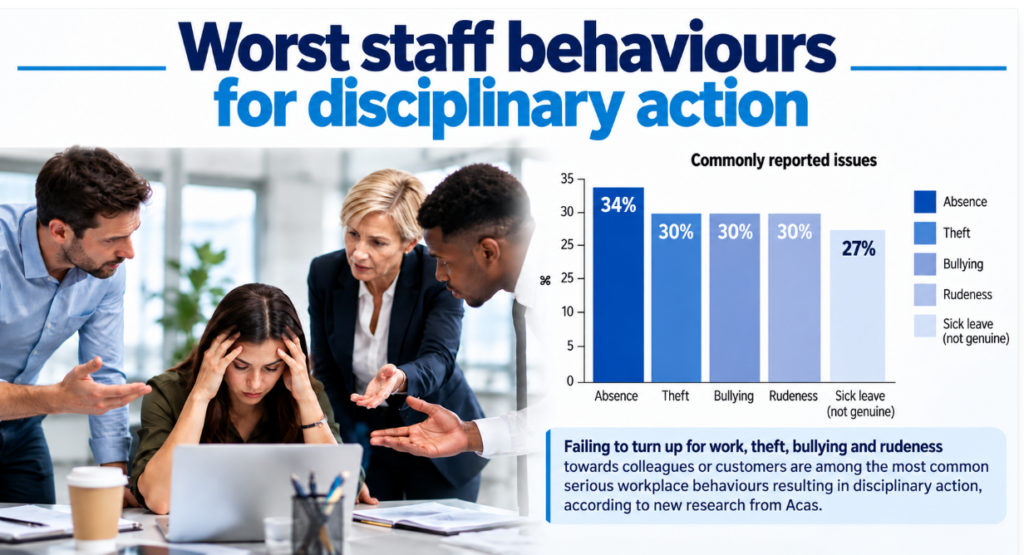
Worst staff behaviours for disciplinary action

New Acas survey highlights key employment law changes employers must prepare for
